
Growing up in a generation that is blessed with having the Internet, I was taught to be extremely cautious when downloading files, entering and sending personal information, and installing software. Of course, the lessons I have learned when using online technology were based on many mistakes made in the past. Clicking on seemingly harmless advertisements, downloading "free" movies or videos, and installing suspicious software has led me to download viruses that cause my system to crash or malfunction. We all know that these viruses lead to infinite headaches and frustration, and at a young age, I learned the safety precautions that prevent me from experiencing that frustration again.
To protect ourselves when using the Internet, we must become knowledgeable in Cyber security. Cyber security is
information protection for computers and networks. Cyber security is essential,
especially in our generation which relies heavily on computers and trusts it
with our personal information. While new technology has made communication and
work life much easier and assessable, such as allowing us to keep track of
banking and pay bills online, it has made the public more sustainable to be
victims of fraud or identity theft. This is why it is important that cyber
security is taken seriously and created reliably to protect the greater public.
The United States has created an organization called the
Computer Emergency Readiness Team (CERT) to help battle common cyber-attacks
and to educate the public about cyber security. On their website, they have a
list of tips for common, non-technical users to follow to protect their
interests. For example, CERT discusses some common terms to be familiar with
when it comes to online security:
- Hacker, attacker, or intruder – these are people that use software to attack people’s computer weaknesses for their own gain.
- Malicious code – this is also known as malware, and code that infects your computer.
- Vulnerability – when attackers take advantage of errors in your software.
McAfee is one of the largest security technology companies in the world. For personal use, McAfee's products McAfee LiveSafe and McAfee All Access protects your data and identity on your devices. These products can be extremely useful to those who have limited computer literacy.
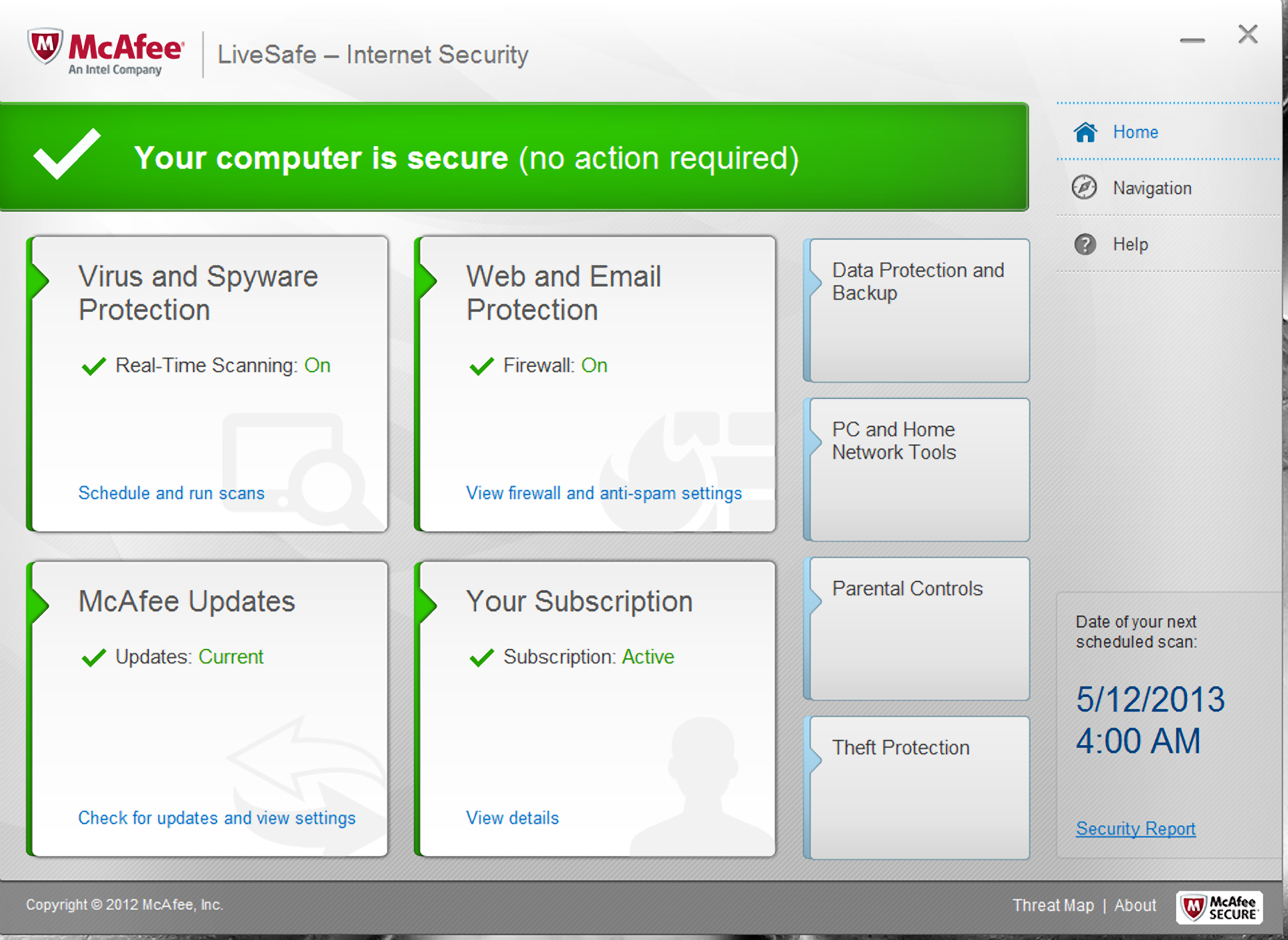
A example of the McAfee LiveSafe software.
Once again, it is always important to protect your
information and become knowledgeable in new technology. Many people underestimate
how public the Internet really is and it is always essential to be aware of
your surroundings—even if it is not physical.
Sources:
McDowell, Mindi, and Allen Householder. "Why Is Cyber Security a Problem?" US-CERT. US Department of Homeland Security, 6 May 2009. Web. 12 Mar. 2014. <https://www.us-cert.gov/ncas/tips/ST04-001>.

A great article for people to know what cyber security is and the government agency that focuses on it. It clearly tells me who a hacker is, what is malicious code and what is a vulnerability. A few examples where lacking or limited cyber security caused massive losses would have further emphasized the need for cyber security.
ReplyDelete