I began my first blog when I was 15. It was a personal blog that focused on a band that I liked at the time and I used my blog to express my opinions on the band, post digital art and media that I liked or created, discuss with those who made comments on my posts. Even though I knew I wouldn't attract many readers or get a lot of comments, I continued to make posts on my blog. I realize now that my personal blog with my online diary--I used it to express myself but in an anonymous way.
You may wonder, what actually is a blog? A blog is a personal website that someone uses to post their opinions on a regular basis. There are actually many different types of blogs, which vary with the topic or theme that they are posting about.
Here are some common types of blogs:
- Personal blog: this is the most common type of blog that people use to talk about any personal topics, such as music, politics, family, travel, health, technology, etc.
- Business blog: professionals can share the opinions, expertise, and skills in their field
- How-to, tips, and reviews: these are blogs that share their tips and reviews about cooking, films, games, etc.
There are many different websites that host blogs making accounts can be free, quick, fun, and easy. Here are some links to websites with excellent interfaces to create, customize, and post on a blog:
www.blogger.com -- you can make multiple blogs on this site that link to your Google account for easy access.
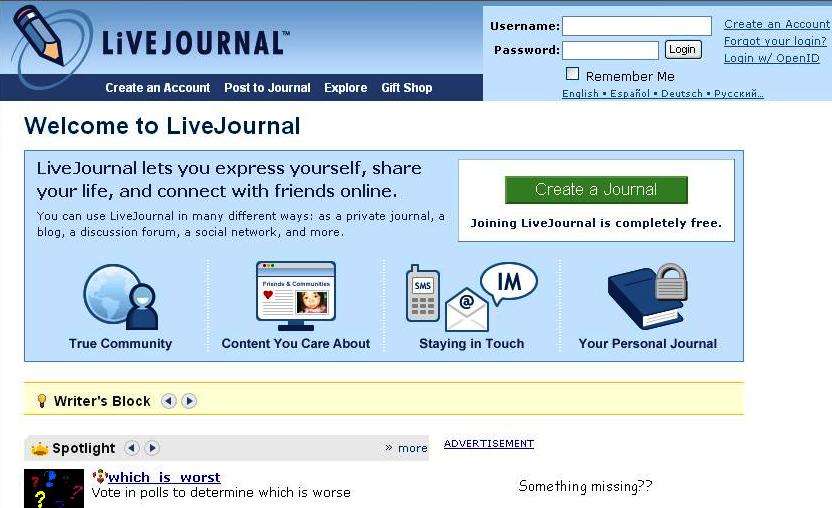
www.livejournal.com -- this site offers privacy controls, photo storage, a large amount of customized templates, and more.
www.tumblr.com -- this is a combination of a blog and a social networking site. It uses a new form of blogging called microblogging, which limits the styles of posts to make it easier for readers to view. You can also easily make posts through your tablet or mobile phone.
In this new era of technology and communication, blogs are essential anonymous self expression and personal growth. Blogs can improve your reading, writing, and communication skills, and attain unbiased opinions from those who comment on your blog. It is important to remember that while blog can be used for personal experiences, it is still on the Internet and widely public. Personal information should be mentioned or distributed discreetly to avoid any major complications. However, I still encourage everyone to have a blog, whether it is about your professional work or your personal hobbies.
Sources
Wordpress Staff. "Types of Blogs." WordPress.com. N.p., n.d. Web. 11 Apr. 2014.